Setting the Stage
Why Beaver? | Hudson’s Bay Company | American Fur Trade | Men of the Expedition
This project presents the first written descriptions of the Crooked River and adjacent watersheds – delivered in place, where written. It includes 40+ journal entries, from Peter Skene Ogden, an expedition leader for the Hudson’s Bay Company (HBC), that describe the people, plants, animals, and conditions found here 200 years ago. Each journal entry is presented on a roadside sign sited at or near the location where written allowing you, the viewer, to read it, view the surrounding landscape, and let your imagination take hold. Some entries are mundane. Others are extraordinary.
Yet, why was the HBC even here? And why were beaver so important? And what was Oregon like then? … Read on!
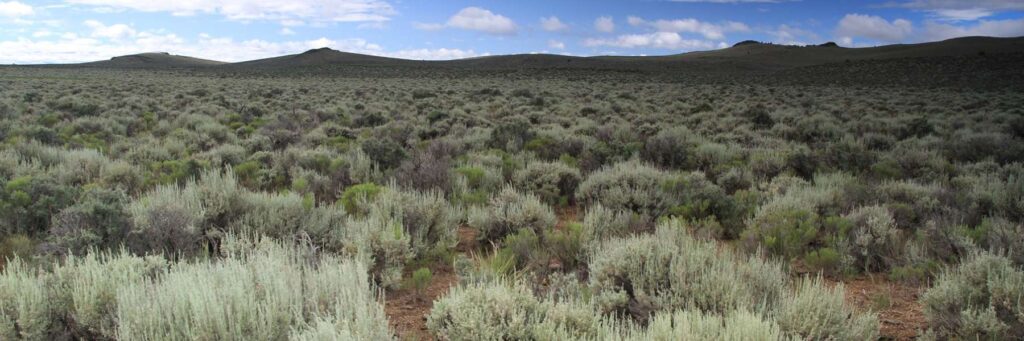
Oregon in the 1820s
• In the 1820s, Oregon Country was “jointly occupied” by Britain and the U.S (under a 1818 convention). The Hudson’s Bay Company (HBC), a British chartered company with close ties to British imperial interests, dominated the fur trade in the region. Beaver pelts were highly valued and the HBC pursued an aggressive strategy of trapping that sought not only to profit from the trade but also, for political reasons, to discourage American trappers and thereby allow England to claim more of the territory. Their directive stated “the country is a rich preserve of Beaver and which for political reasons we should endeavour to destroy as fast as possible.” Ogden’s brigade was one of several that criss-crossed the Oregon country for 1825-1829 and did just that. Each brigade took four to five thousand per year. See the About section for a map of Ogden’s routes.
• By 1825, trade and travel along the Columbia were well established, yet the interior – the Crooked, Silvies, Malheur, and upper John Day watersheds – had not been explored by Europeans. In late 1825, Ogden led an expedition from Fort Nez Perce (near the mouth of the Walla Walla River), down the Columbia and up the Deschutes (then termed the “River of the Falls”). On December 12, 1825, he crossed the Deschutes at the Warm Springs River and ascended Trout Creek and then Hay Creek on route to the Crooked River, then a “Fork” of the “River of the Falls.” He kept a daily journal and his entries are presented on the roadside signs. Punctuation has been occasionally added to improve readability.
• The expedition included approximately 50 men and guns, 200 horses, and 280 traps. See Statement of Freemen and Servants below for a representative listing. Though against company policy, women accompanied the expedition (about 1/3 as many as men), though their contributions were not recorded. Some children also accompanied the expedition.
• According to Ogden, Native Americans were of 2 groups – those along the Columbia who traded with Europeans and had horses and guns (Nez Perce, Cayuse) and those of the interior who had less contact and no horses or guns. Their defense was often to hide. Ogden repeatedly mistook their encampments as “abandoned” while the inhabitants were merely hiding.
• Ogden’s expedition hunted in winter for thicker pelts and to give “unruly men” something to do in winter. This hastened removal by killing pregnant females.
• In 1826, on four passes, and with help from Nez Perce trappers, Ogden removed ~2,000 beaver from Prineville to the headwaters. This loss (of beaver and water storage) greatly impacted the local Northern Paiute and reshaped the Crooked River in ways that are still felt today (e.g., incised streams, loss of water storage, loss of floodplain connection).
Why Beaver?
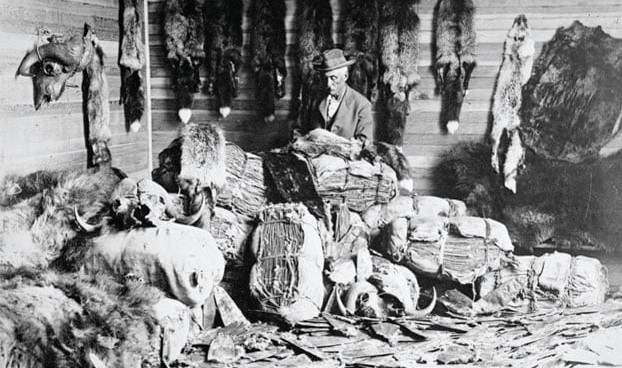
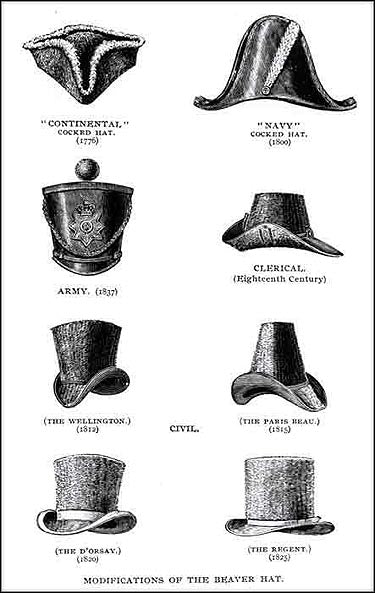
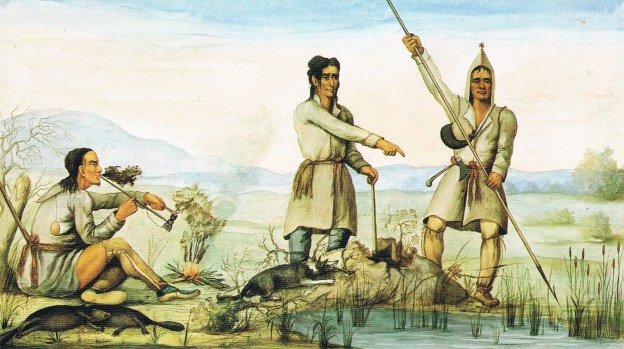
In the early 1800s, beaver were one of the most sought-after furs in the world. Beaver pelts were prized by European hat makers because their fine, dense underfur could be processed into a material that was strong, warm, water-resistant, and—most importantly—could be felted into high-quality hats. Beaver hats became a symbol of fashion and status, worn by everyone from working men to gentlemen and military officers. The demand was enormous, and a good beaver pelt could command a substantial price. For the trappers of the Hudson’s Bay Company, beaver was therefore much more than just another fur: it was the foundation of a highly profitable international trade.
Beaver as Currency
The Hudson’s Bay Company used the “made beaver” (MB) as a standard unit of value in the fur trade. A prime beaver pelt represented one made beaver, and the value of trade goods could be expressed in MB rather than in money. In this system, beaver pelts functioned much like a currency: a trapper could exchange his pelts for goods whose values were stated in made beaver. The examples below are representative HBC trade values from the 1820s, intended to give a sense of both the purchasing power of beaver and the kinds of goods that were desired.
| Trade good | Value |
|---|---|
| 24 awl blades | 1 MB |
| 24 sewing needles | 1 MB |
| 20 fish hooks | 1 MB |
| Tobacco, one twist | 1 MB |
| Shirt | 1–2 MB |
| Hatchet or small axe | 2 MB |
| 1-point wool blanket | 2 MB |
| 1 gallon of brandy | 4 MB |
| 3-gallon kettle | 6 MB |
| 4-point wool blanket | 6 MB |
| Trade gun, 3-foot barrel | 10 MB |
| Trade gun, 4-foot barrel | 12 MB |
Hudson’s Bay Company
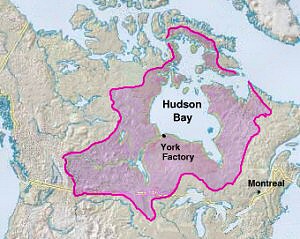
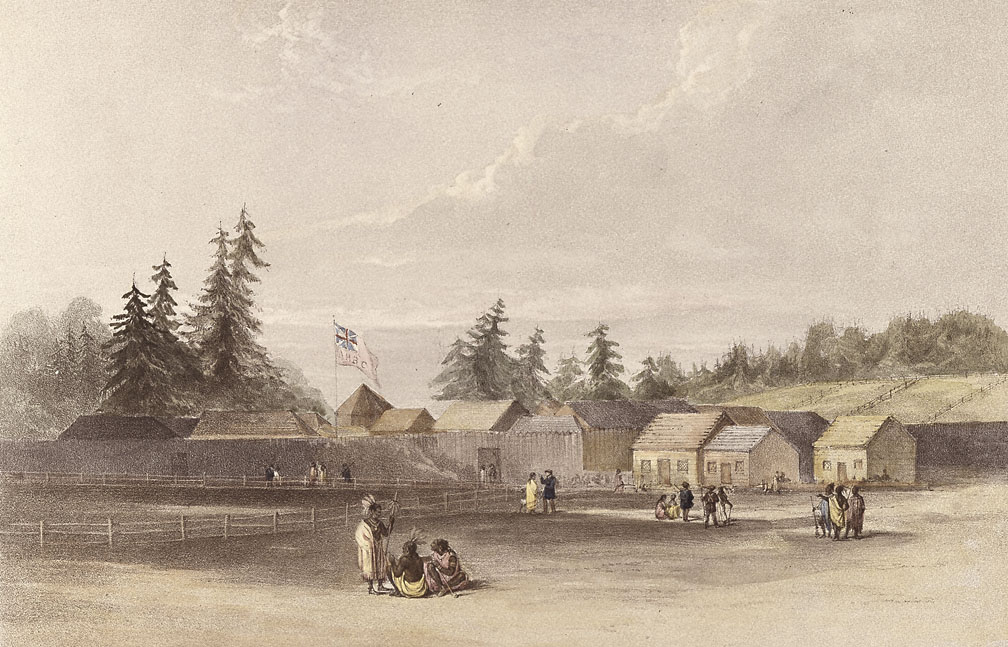
The Hudson’s Bay Company (HBC) was established in 1670 by a royal charter from King Charles II of England. Although created as a private trading company, the charter granted it extraordinary powers, including a monopoly over trade in the vast watershed draining into Hudson Bay. During the next century and a half, the Company built trading posts across northern North America, exchanged European goods for furs supplied largely by Indigenous trappers, and became one of the world’s most influential commercial enterprises. In many regions, it exercised authority that today we associate with governments—establishing posts, negotiating with Indigenous nations, administering justice, and directing trade.
Commerce, Competition, and Change
For more than a century, the HBC competed fiercely with rival fur traders, especially the Montreal-based North West Company. Their competition drove exploration deeper into the continent and occasionally erupted into violence. In 1821, after years of conflict and financial strain, the two companies merged under the Hudson’s Bay Company name. The merger transformed the HBC into the dominant fur-trading enterprise across much of British North America, with an immense network of forts, trading posts, transportation routes, and thousands of employees drawn from many cultures and backgrounds.
The Oregon Country
The merger coincided with growing British and American interest in the Oregon Country, a vast region jointly occupied by Britain and the United States under the Convention of 1818. Neither nation exercised exclusive sovereignty, and the future boundary remained uncertain. Under Governor George Simpson, the HBC expanded operations west of the Rocky Mountains, while Chief Factor John McLoughlin established Fort Vancouver in 1825 as the Company’s headquarters on the lower Columbia River (moving inland from Fort Astoria). Although the Company’s primary purpose remained commercial, its activities also supported British interests by strengthening its presence in the disputed region.
It was within this larger strategy that Peter Skene Ogden (and several other HBC brigade leaders) led trapping expeditions (from 1825-1829) into what are now Oregon, Washington, Idaho, Nevada, Utah, and northern California. Company records make clear that these brigades pursued more than profitable beaver harvests. By heavily trapping watersheds south of the Columbia, the HBC hoped to create what later became known as a “fur desert”—reducing the region’s attractiveness to competing American trappers while continuing to profit from the pelts that remained. Ogden’s 1825–1826 expedition through the Crooked River country was one chapter in this broader commercial and geopolitical strategy, leaving a written record that today provides one of the earliest detailed accounts of the region.
A change for the 1820s
From its inception, the Hudson’s Bay Company relied heavily on Indigenous people—first as trappers and trading partners, and increasingly as employees. Native and mixed-ancestry (Métis) people occupied positions at many levels within the Company. Furthermore, Indigenous trappers could choose where to sell their furs, offering them to either the Hudson’s Bay Company or the North West Company and, through competition, obtain better prices.
Yet, in 1821, the two companies merged, ending competition and giving the Hudson’s Bay Company a monopoly. This loss of competition reduced the bargaining power of Indigenous trappers and allowed the Company greater latitude in setting the prices it paid. At the same time, George Simpson emerged as the Company’s CEO (governor-in-chief) for North America. Simpson’s previous experience was in the British West Indies sugar trade, a system dependent upon slave labor. Whether shaped by that experience, his own views, or the broader attitudes of the British Empire, Simpson imposed a more rigid racial hierarchy within the Company. Indigenous and Métis people were pushed out of many senior positions, and the Company increasingly discouraged or prohibited its employees from marrying Indigenous women.
The consequences were significant. Indigenous and Métis employees who had long provided relationships, knowledge, and connections to Indigenous communities lost influence within the Company. Indigenous trappers, meanwhile, had lost the leverage that competition between two companies had provided. Together, these changes altered the character of the fur trade, contributed to growing resentment among Indigenous communities, and marked a significant shift away from the more integrated society that had characterized the earlier trade.
The Company: The Rise and Fall of the Hudson’s Bay Empire, by Stephen R. Bown
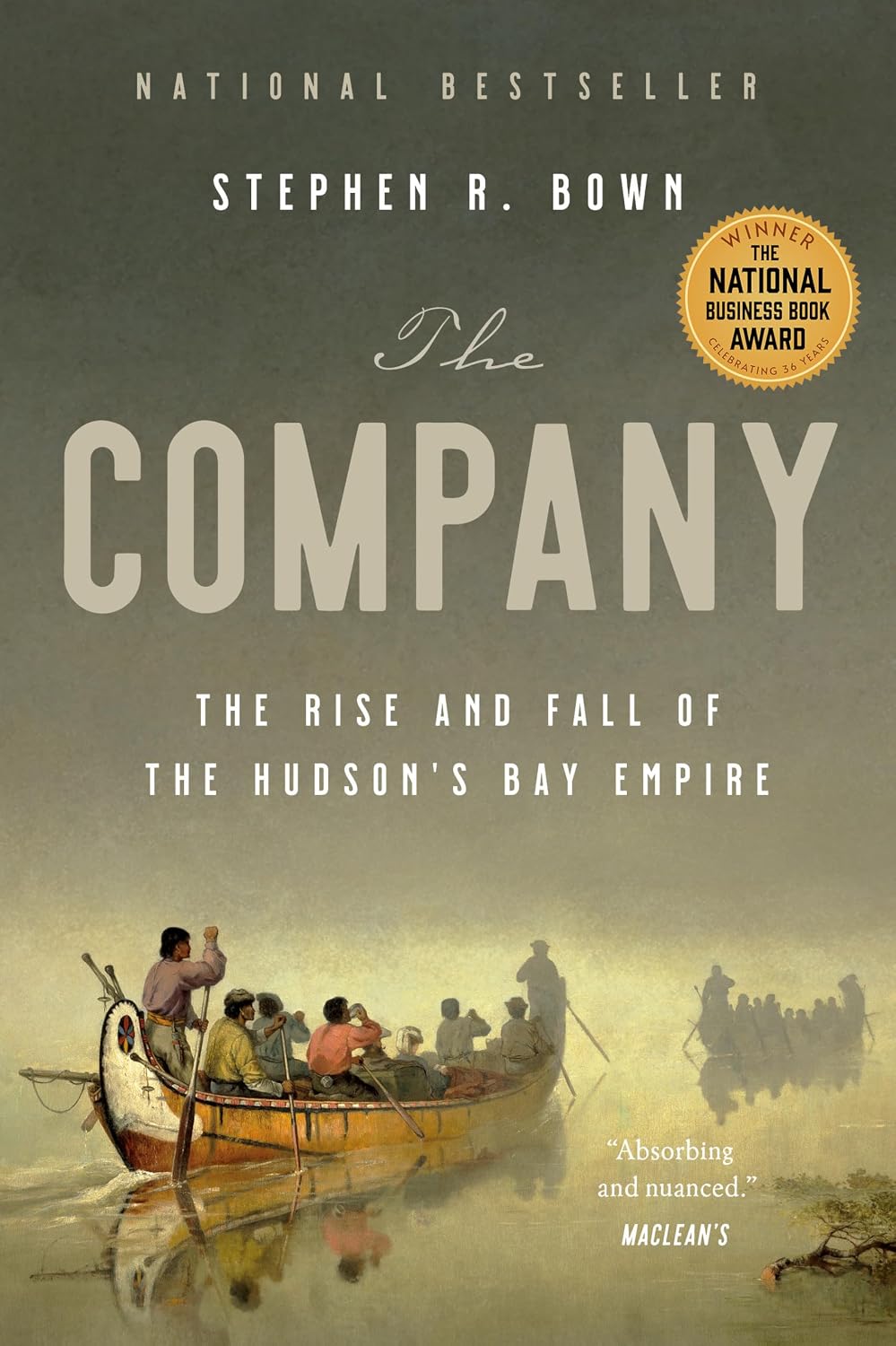
Stephen R. Bown has authored an extraordinary book on the history of the HBC (and North America).
It is recently published, exceptionally well written and researched, and highly acclaimed.
You will enjoy this read.
American Fur Trade
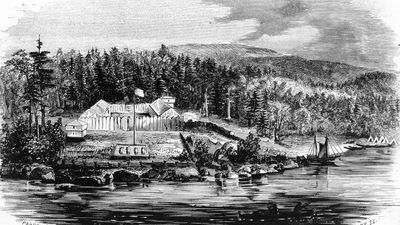
The American fur trade expanded rapidly in the early nineteenth century as merchants and entrepreneurs sought to compete in the lucrative international market for furs. One of the most ambitious efforts was launched by John Jacob Astor, whose American Fur Company established trading networks across the Great Lakes, the Missouri River, and the Pacific Northwest. In 1811, Astor’s Pacific Fur Company founded Fort Astoria at the mouth of the Columbia River, seeking to establish an American presence in the region’s growing maritime and overland fur trade. Although the venture was short-lived and the post was sold to the British during the War of 1812, it demonstrated American interest in the Pacific Northwest and helped establish routes later used by American traders and trappers.
Following the Lewis and Clark expedition and the growth of the Missouri-based fur trade, American trappers increasingly crossed the Rocky Mountains in search of new beaver streams. Independent trappers and company brigades moved into the interior valleys of the West, including areas claimed by Britain but not yet assigned to either nation. Their presence contributed to the competition that concerned the Hudson’s Bay Company. When Ogden’s brigades encountered American trappers during their southern expeditions—including confrontations in the Great Salt Lake region—those encounters reflected a much larger contest between British and American commercial interests. Beaver, therefore, was not only a valuable commodity; it was also part of the broader struggle for influence in the unsettled Oregon Country.
Men (and Women) of the Expedition
Ogden’s first campaign in the lower Columbia basin took place during the 1824–25 season, when he trapped in western Montana and along the Snake River in Idaho. His second campaign, during the 1825–26 season, took him along the Crooked River and through the interior of Oregon.
Below is a “Statement of Freemen & Servants” from Ogden’s first campaign. A comparable statement for his second campaign is not known to survive. However, based on other correspondence, the number of men, guns, traps, and horses appears to have been similar though about 10–15 percent less. The following is therefore a representative listing for the second campaign rather than a precise roster. Many of the same individuals participated in both campaigns. The large number of French names also reflects the strong influence of the former North West Company, whose employees and traditions became part of the Hudson’s Bay Company’s operations after the two companies merged in 1821.
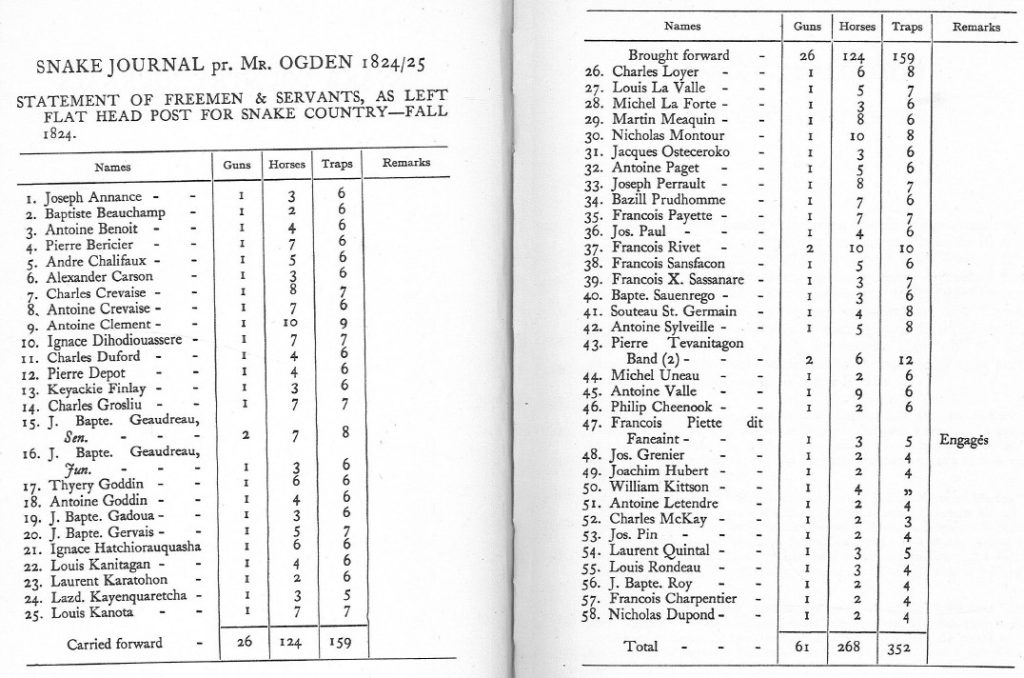
Freemen, servants, and “engaged men”
The Hudson’s Bay Company used several terms to describe the men who worked in the fur trade, and the distinctions do not map perfectly onto modern employment categories. A servant was generally a man hired by the HBC under a contract for a specified period, typically receiving wages, food, clothing, and other provisions. In modern terms, he was broadly comparable to an employee on a fixed-term contract. An engaged man was simply a man who had been engaged—hired or contracted—to work for the Company, and the term could encompass men serving in different capacities.
A freeman, by contrast, was generally a man who was not under a current HBC service contract. He might have been a former company employee whose contract had expired and who continued to live and work in the fur trade independently, trapping or trading on his own account. In modern terms, he is somewhat analogous to an independent contractor or self-employed worker, although the comparison is imperfect. Freemen could maintain close relationships with the HBC and sometimes worked alongside or traded with Company parties. These categories also overlapped in practice, and the terminology used in HBC records was not always consistent.
What happened to the men?
Perhaps Stephen R. Bown says it best. In his book, The Company: The Rise and Fall of the Hudson’s Bay Empire, on p. 368, he writes:
Ogden’s forays were well organized, ruthlessly and efficiently hauling in many thousands of beaver every year, including females and young, even if the pelts were valueless. During these years his man nearly starved, were lost, nearly froze, were drowned and engaged in gun battles. “This life makes a young man sixty in a few years. … A convict at Botany Bay is a gentleman at ease compared to my trapper,” he wrote, but added that his men loved the roving dangerous life and that “they would regard it as a punishment to be sent to Canada.” By the time he retired in the 1840s, after being transferred to Company posts on the coast and then inland to Fort St. James, nearly all of his original men had died in the field.
Women of the Expedition
The trapping parties were overwhelmingly male, but women were also part of the world of the fur trade. Although the Hudson’s Bay Company generally discouraged women from accompanying its mobile trapping brigades, farther west these rules were often bent to accommodate the realities of the trade. Company officers and other leaders sometimes needed to allow men to bring their wives or families, particularly where established relationships with Indigenous communities were important to recruiting, diplomacy, and access to local knowledge. Women who accompanied the parties contributed in numerous practical ways, including preparing food and supplies and dressing and processing the pelts after the men returned from trapping. Women also gathered food, traveled with the parties, and performed many other tasks essential to their survival.
Their contributions are largely invisible in the expedition journals and official HBC records, which overwhelmingly record the activities and accomplishments of men. This absence from the written record should not be mistaken for an absence from the expedition itself. The women who accompanied fur-trade parties—many of them Indigenous or Métis—were an important, if poorly documented, part of the workforce and social fabric that made the western fur trade possible.
Setting the Stage | Why Beaver? | Hudson’s Bay Company | American Fur Trade | Men of the Expedition