July 3-6, 1826
Here are the posted journal entries for July 3-6, 1826.
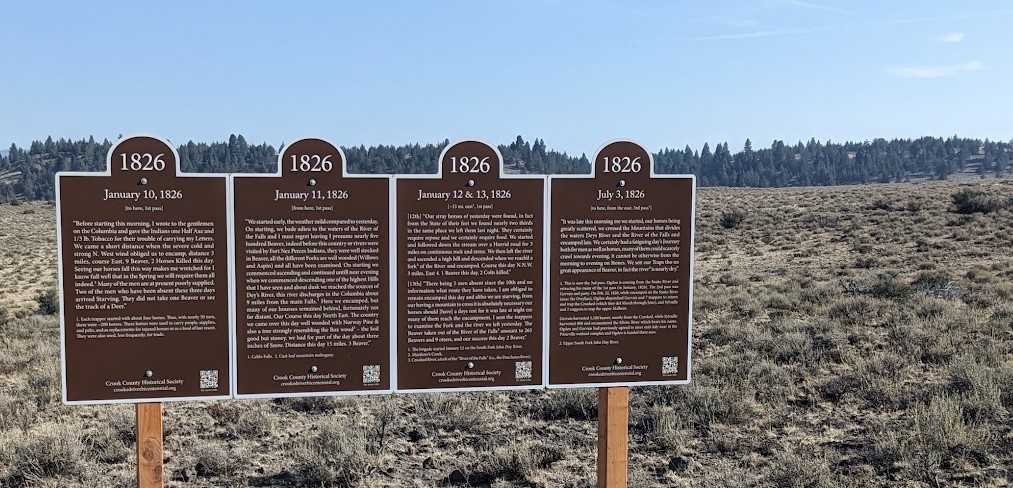
July 3, 1826
to NF Beaver Creek (from the east)1
“It was late this morning ere we started, our horses being greatly scattered, we crossed the Mountains that divides the waters Deys River and the River of the Falls and encamped late. We certainly had a fatiguing day’s Journey both for men as well as horses, many of them could scarcely crawl towards evening, it cannot be otherwise from the morning to evening on Stones. We sett our Traps tho no great appearance of Beaver, in fact the river2 is nearly dry.”
1. This is now the 3rd pass. Ogden is coming from the Snake River and retracing his route of the 1st pass (in January, 1826). The 2nd pass was Gervais and party. On Feb. 22, 1826, while encamped on the Snake River, near the Owyhee, Ogden dispatched Gervais and 7 trappers to return and trap the Crooked (which they did March through June), and Sylvaille and 5 trappers to trap the upper Malheur.
Gervais harvested 1,100 beaver, mostly from the Crooked, while Sylvaille harvested 800 and encountered the Silvies River which bears his name. Ogden and Gervais had previously agreed to meet mid-July near at the Prineville wetland complex and Ogden is headed there now.
2. Upper SF John Day River.
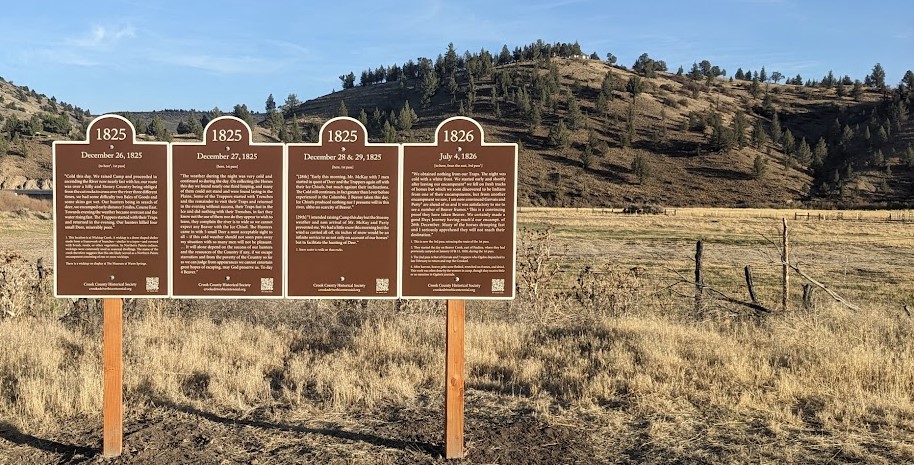
July 4, 1826
to Wickiup Creek
“We obtained nothing from our Traps. The night was cold with a white frost. We started early and shortly after leaving our encampment we fell on fresh tracks of horses but which we soon discovered to be Indians from one of their encampments, but from another encampment we saw, I am now convinced Gervais and Party1 are ahead of us and it was satisfactory to me to see a number of Beaver frames.2 This is a convincing proof they have taken Beaver. We certainly made a good Days Journey having reach’d our encampt. of 26th December. Many of the horses drooping fast and I seriously apprehend they will not reach their destination.”
1. Gervais conducted the 2nd pass and Ogden is on route to find him.
2. After harvest, beaver pelts were fleshed, stretched on frames, and dried. This work was often done by the women in camp, though they receive little or no mention in Ogden’s journals.
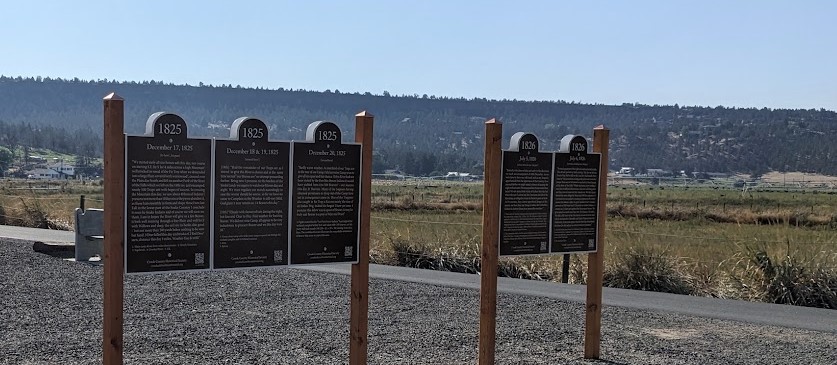
July 5, 1826
Crooked River Wetland Complex
“Started at the dawn of day and early in the afternoon we reach our encampment of 18th December. As we were here to leave our old track and as my Iroquois apprehended from the appearance of the Country, if we proceed farther we might stand a chance of passing the night without water. We encamped four hours earlier than usual. We saw many fresh tracks of Indians this day but where they are I cannot say, but I presume are hid in the Mountains or obliged to resort to them in quest of food. As for enemies, they cannot apprehend danger at this season, nor have they any thing to induce the Columbia Indians to destroy these poor miserable wretches.1”
1. This comment reflects on the power dynamic between the Columbia tribes (Nez Perce, Cayuse), who had guns and horses, and the interior tribes (Northern Paiute) who did not. It may also reveal something of Ogden’s mindset.
July 6, 1826
from Crooked River Wetland Complex
“It rained a great part of the night and continued until midday. This did not prevent us from starting. This day we left our Track of last Fall to fall on the road Mr. McDonald’s Party came by.1 We crossed over a long sandy point well covered in Juniper Trees and at 10 oclock we reached the Main Branch of the River of the Falls.2 While our horses were feeding, I sent Men in different directions to discover a fording place and they were 4 hours ere they found one. We then again Started but were obliged to Strip and with the assistance of our horses we succeeded in crossing. It appears in the winter season the Indians collect in great numbers for I counted upwards of 100 huts but if Clamuths or Snake Indians I cannot say; it does not appear they have many horses. We proceeded on untill near Sun Sett. W. distance 30 miles. We had a full view of the Mountains we are to Cross and which separates the Clamuthe and Snake Nations from the Wallamitte. It does not appear that the Sun has diminished the Snow for they appear as well covered as in January.”
1. Mr. McDonald came from the Willamette Valley, following a Native American trail over Santiam Pass. From here, Ogden will take that route (with some difficulty), descend the Willamette River to the Falls, and go by canoe to Fort Vancouver.
2. The Deschutes River.
December 17–31, 1825 | January 1-13, 1826 | July 3–6, 1826 | Sept 27-Oct 7, 1826