January 1-13, 1826
Here are the posted journal entries for January 1-13, 1825.
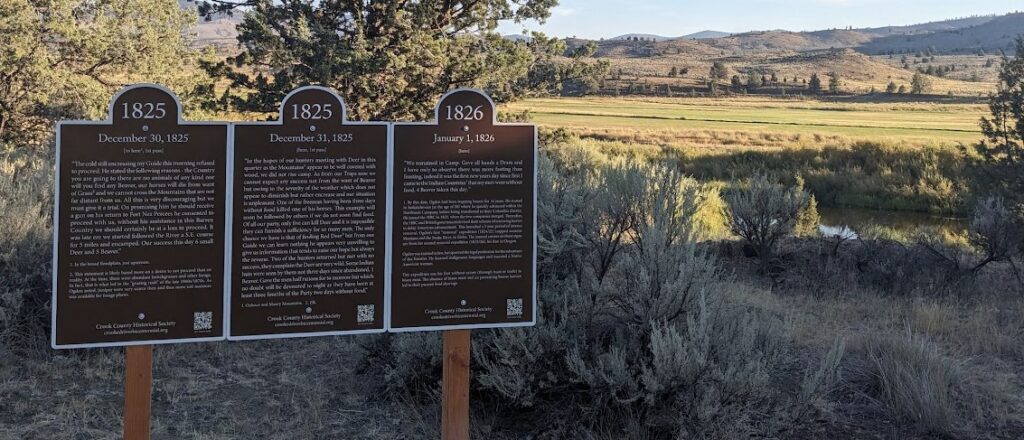
January 1, 1826
at Post
“We remained in Camp. Gave all hands a Dram and I have only to observe there was more fasting than feasting, indeed it was the first new years day since first I came to the Indian Countries1 that my men were without food. 4 Beaver taken this day.”
1. By this date, Ogden had been trapping beaver for 16 years. He started in Saskatchewan (at the age of 20) where he quickly advanced within the Northwest Company before being transferred to their Columbia district. He joined the HBC in 1821, when the two companies merged. Thereafter, the HBC and British government devised their scheme of removing beaver to delay American advancement. Ogden was trained in law, but spurned the legal profession for the adventure of the frontier. He learned indigenous languages and married a Native American woman.
This expedition was his first without access (through hunt or trade) to bison meat. The absence of bison meat and ice preventing beaver harvest led, in significant part, to their present food shortage.
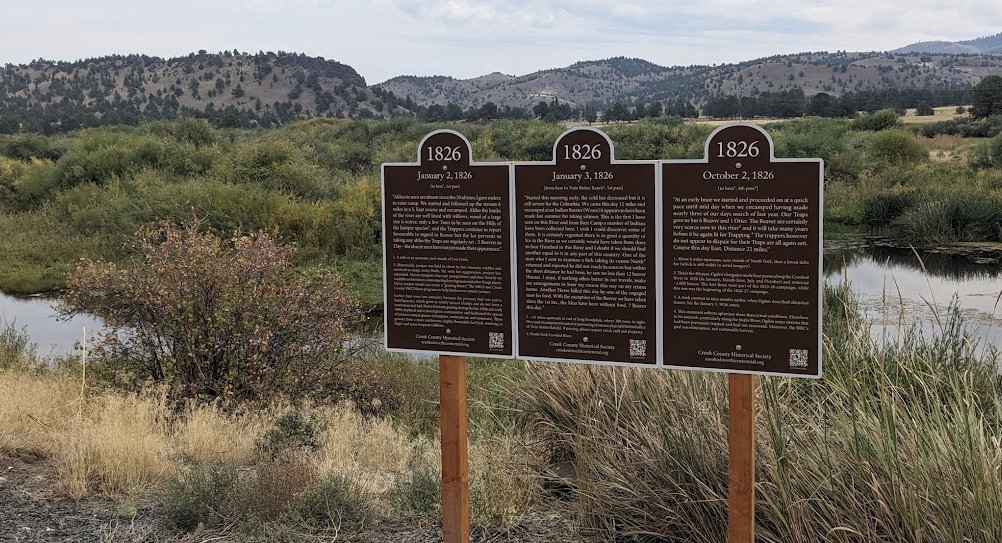
January 2, 1826
to Lost Creek/Teaters Road
“Altho six men are absent since the 30 ultimo, I gave orders to raise camp. We started and followed up the stream 6 miles in a S. East course and encamped. Altho the banks of the river are well lined with willows, wood of a large size is scarce, only a few Trees to be seen on the Hills of the Juniper species1, and the Trappers continue to report favourable in regard to Beaver but the Ice prevents us taking any altho the Traps are regularly sett. 3 Beavers to Day – the absent men have not yet made their appearance.”
1. Historically, juniper was held in check by low-intensity wildfire and confined to steep, rocky bluffs. Yet, with fire suppression, juniper has expanded. Mature junipers intercept precipitation and draw heavily on available soil moisture, outcompeting bunchgrasses and other forage plants. Dense juniper stands can create a “grazing desert.” The NRCS and Crook County SWCD have programs to help landowners remove juniper.
Earlier fires were low-intensity because the primary fuel was native bunchgrasses, which grow in widely spaced clumps and do not form a continuous fuel bed. Heavy livestock grazing during the late 1800s and early 1900s depleted native bunchgrass communities and facilitated the spread of invasive annual grasses (cheatgrass, medusahead, and ventenata). These grasses form a more continuous, highly flammable fuel bed, resulting in larger and more frequent wildfires.
January 3, 1826
near MP 47, meadow at Twin Buttes Ranch
“Started this morning early, the cold has decreased but it is still severe for the Columbia. We came this day 12 miles and encamped at an Indian Barrier (Weare) it appears to have been made last summer for taking salmon. This is the first I have seen on this River and from their Camp a number of Indians have been collected here. I wish I could discouver some of them. It is certainly regretted there is so great a quantity of Ice in the River as we certainly would have taken from three to four Hundred in this River and I doubt if we should find another equal to it in any part of this country. One of the men who I sent to examine a fork taking its course North2 returned and reported he did not reach its sources but within the short distance he had been, he saw no less than 12 beaver Houses. I must, if nothing offers better in our travels, make my arrangements to Steer my course this way on my return home. Another Horse killed this day by one of the engaged men for food. With the exception of the Beaver we have taken since the 1st ins., the Men have been without food. 7 Beaver this day.”
1. Weir located where stream channel narrows, and the encampment wasbin the floodplain adjacent. When viewing, please respect the privacy of residents and staff.
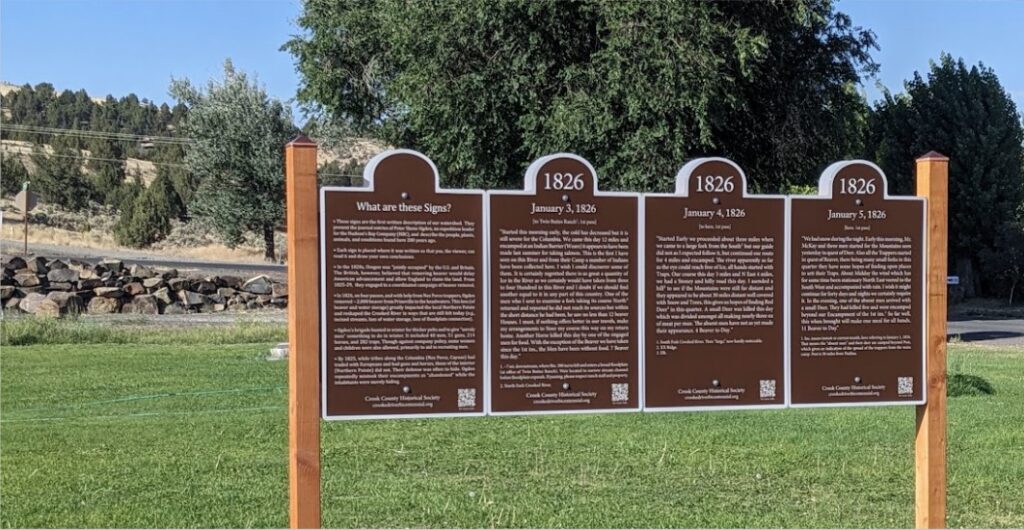
January 4, 1826
to Paulina
“Started Early we proceeded about three miles when we came to a large fork from the South1 but our guide did not as I expected follow it, but continued our route for 4 miles and encamped. The river apparently as far as the eye could reach free of Ice, all hands started with Traps. Our course this day 3 miles and N East 4 miles, we had a Stoney and hilly road this day. I asended a hill2 to see if the Mountains were still far distant and they appeared to be about 30 miles distant well covered with Snow and Trees, this gives us hopes of finding Red Deer3 in this quarter. A small Deer was killed this day which was divided amongst all making nearly three oz of meat per man. The absent men have not as yet made their appearance. 4 Beaver to Day.”
1. South Fork Crooked River. Then “large,” now hardly noticeable. 2. Elk. 3. XX Ridge.
January 5, 1826
at Paulina
“We had snow during the night. Early this morning, Mr. McKay and three men started for the Mountains seen yesterday in quest of Deer. Also all the Trappers started in quest of Beaver, there being many small forks in this quarter they have some hopes of finding open places to sett their Traps. About Midday the wind which has for some time been stationary North East veered to the South West and accompanied with rain. I wish it might continue for forty days and nights we certainly require it. In the evening, one of the absent men arrived with a small Deer. They had killed five and were encamped beyond our Encampment of the 1st ins.1 So far well, this when brought will make one meal for all hands. 11 Beaver to Day.”
1. “Ins.” means instant or current month, here referring to January 1, 1826. That means the “absent men” and their deer are camped beyond Post, which gives an indication of the spread of the trappers from the main camp. Post is about 30 miles from Paulina.
January 6, 1826
to the Sartain/Blue Mountain Ranch
“Sent three men for meat, it rained during the night but clear and mild this morning. We raised camp to facilitate the Trappers as their Horses are in a low state many of them can scarsely crawl, not from the want of Grass but from the froze state of the ground, but march they must or we starve. We proceeded about 5 miles and encamped on a small Fork1 well lined with Aspin.2 The main fork is nearly at an end and as we have been ascending for some time past, we must now be on very high land and may soon expect to see another river for from the long range of Mountains visible nearly on all sides of us, there must I am of an opinion be some larger river near by. In the evening, Mr. McKay and party arrived without seeing the track of an animal, he reports he found on an average four feet of Snow in the Mountains so this at once blasts my hopes of finding Deer in this quarter – what will become of us? Our success this day 9 Beaver and two Otters. All our Traps sett but very crowded and no want of Ice this day with rain.”
1. Perhaps Paulina Creek or the west side of the Sartain, the broad wet meadow where Wolf Creek and a few other streams join Beaver Creek.
2. Where are these aspen now? If you look closely, you may see remnant stands towards the Beaver Creek headwaters.
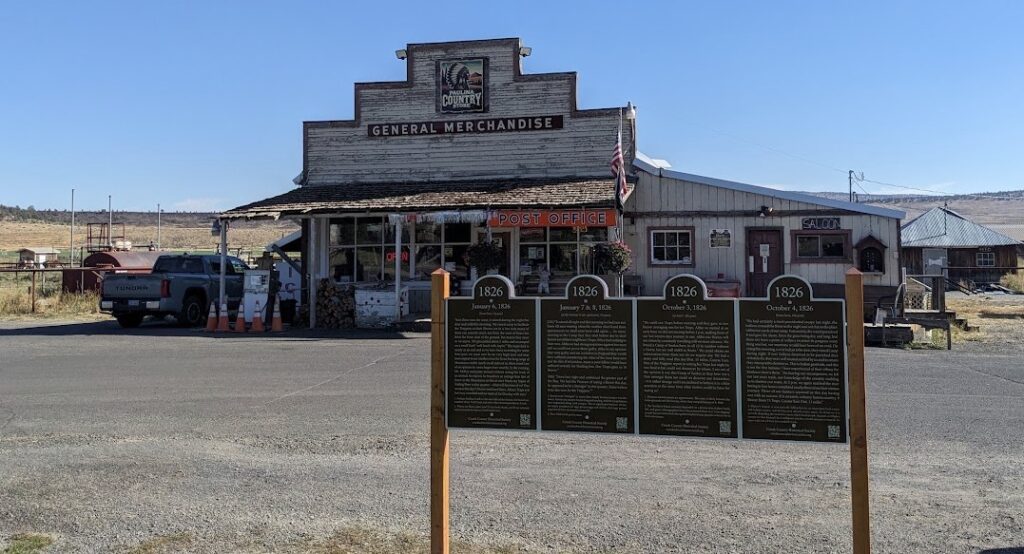
January 7, 1826
at the Sartain
“It rained all night and this morning we had rain and Snow till near evening when the weather clear’d and from appearances we shall soon have cold again. … So many starving in the Camp that they start before day to steal Beaver out of their neighbours Traps, if they find nothing in their own. Altho we had strong suspicions against two men still we could not prove them guilty, altho in my opinion they were guilty and am confident in England they would have suffered considering the value of the meat here now and the skin if in London, many a poor fellow would have suffered severely for Stealing less. Our Traps gave us 10 Beaver.”
January 8, 1826
at the Sartain
“Snow last night and continued the greater part of the Day. We had the Pleasure of seeing a Raven this day, he appeared to be a Stranger1 in this quarter. Some wolves were also seen by the Trappers.2”
1. Ravens were “strangers” or scarce then, largely because juniper was also scarce. Ravens use juniper for perching and nesting, and their populations have expanded along with juniper. This is significant because ravens are major predators of sage grouse eggs and chicks, and sage grouse populations are declining.
2. How Wolf Creek got its name.
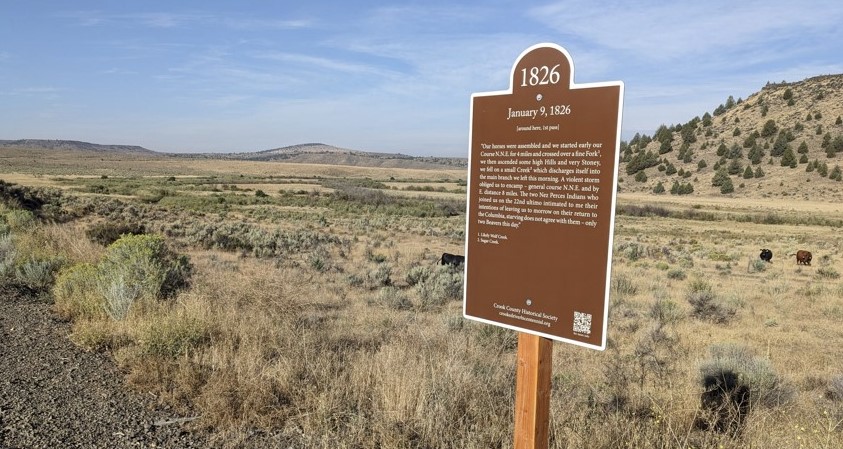
January 9, 1826
toward North Fork Beaver Creek
“Our horses were assembled and we started early our Course N.N.E. for 4 miles and crossed over a fine Fork1, we then ascended some high Hills and very Stoney, we fell on a small Creek2 which discharges itself into the main branch we left this morning. A violent storm obliged us to encamp – general course N.N.E. and by E. distance 8 miles. The two Nez Perces Indians who joined us on the 22nd ultimo intimated to me their intentions of leaving us to morrow on their return to the Columbia, starving does not agree with them – only two Beavers this day.”
1. Likely Wolf Creek. 2. Sugar Creek.
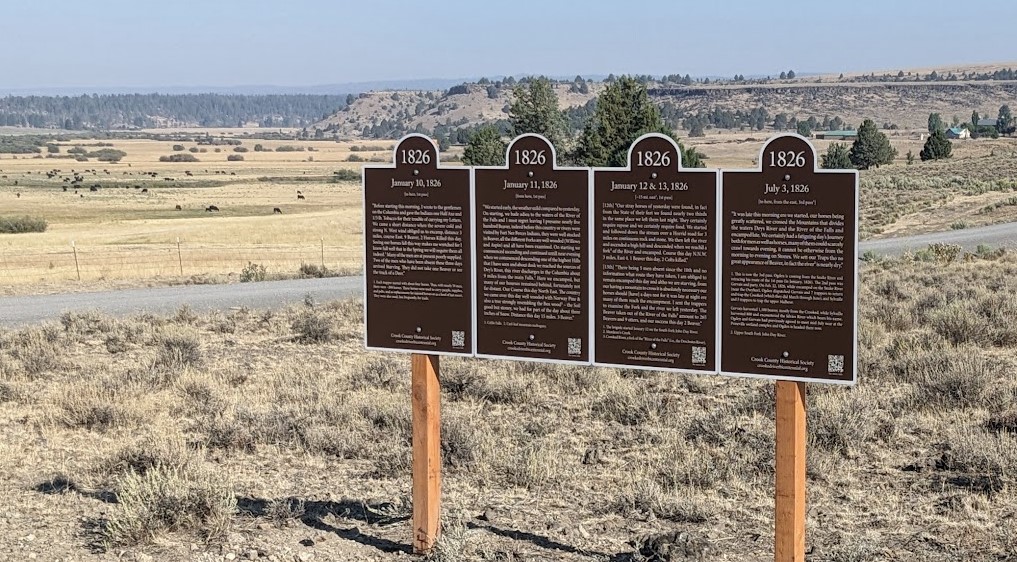
January 10, 1826
to Powell Valley
“Before starting this morning, I wrote to the gentlemen on the Columbia and gave the Indians one Half Axe and 1/3 lb. Tobacco for their trouble of carrying my Letters. We came a short distance when the severe cold and strong N. West wind obliged us to encamp, distance 3 miles, course East. 9 Beaver, 2 Horses Killed this day. Seeing our horses fall this way makes me wretched for I know full well that in the Spring we will require them all indeed.1 Many of the men are at present poorly supplied. Two of the men who have been absent these three days arrived Starving. They did not take one Beaver or see the track of a Deer.”
1. Each trapper started with about four horses, thus with nearly 50 men there were about 200 horses. These horses were used to carry people, supplies, and pelts, and as replacements for injured horses or as a food of last resort. They were also used, less frequently, for trade.
January 11, 1826
to headwaters of SF John Day
“We started early, the weather mild compared to yesterday. On starting, we bade adieu to the waters of the River of the Falls and I must regret leaving I presume nearly five hundred Beaver, indeed before this country or rivers were visited by Fort Nez Perces Indians, they were well stocked in Beaver, all the different Forks are well wooded (Willows and Aspin) and all have been examined. On starting we commenced ascending and continued untill near evening when we commenced descending one of the highest Hills that I have seen and about dusk we reached the sources of Dey’s River, this river discharges in the Columbia about 9 miles from the main Falls.1 Here we encamped, but many of our hourses remained behind, fortunately not far distant. Our Course this day North East. The country we came over this day well wooded with Norway Pine & also a tree strongly resembling the Box wood2 – the Soil good but stoney, we had for part of the day about three inches of Snow. Distance this day 15 miles. 3 Beaver.”
1. Celilo Falls. 2. Curl-leaf mountain mahogany.
January 12, 1826
to Murderer’s Creek
“Our stray horses of yesterday were found, in fact from the State of their feet we found nearly two thirds in the same place we left them last night. They certainly require repose and we certainly require food. We started and followed down the stream over a Horrid road for 3 miles on continuous rock and stone. We then left the river and ascended a high hill and descended when we reach’d a fork of the River and encamped. Course this day N.N.W. 3 miles, East 4. 1 Beaver this day, 2 Colts killed.”
January 13, 1826
at Murderer’s Creek
“There being 5 men absent since the 10th and no information what route they have taken, I am obliged to remain encamped this day and altho we are starving, from our having a mountain to cross it is absolutely necessary our horses should [have] a days rest for it was late at night ere many of them reach the encampment. I sent the trappers to examine the Fork and the river we left yesterday. The Beaver taken out of the River of the Falls1 amount to 265 Beavers and 9 otters, and our success this day 2 Beaver.”
1. Crooked River, a fork of the “River of the Falls” (i.e., the Deschutes River).
December 17–31, 1825 | January 1-13, 1826 | July 3–6, 1826 | Sept 27-Oct 7, 1826