September 27 – October 7, 1826
Here are the posted journal entries for September 27 – October 7, 1826.
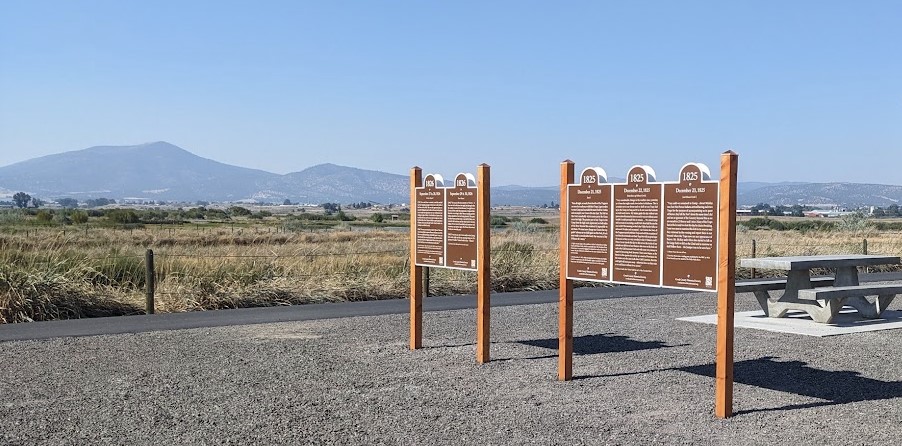
September 27, 1826
at Crooked River Wetland Complex, 4th pass1
“At an early hour we started, at mid day reached our first Trapping encampt. of last year on the Forks of the River of the Falls. This was the appointed place to meet the Williamette party with our Horses, but they have not yet made their appearance nor can we discouver any vestiges or signs of them. I am therefore of opinion they are still in the rear and I am at a loss to assign any cause for their delay. Some Traps sett altho no great appearance of Beaver. Our course this day South. Cloudy weather. An Antelope was killed this day.”
1. Now the 4th pass. This is the start of the 1826/27 season. The party is again traversing the Crooked, yet this time on route to the Silvies River.
September 28, 1826
at Crooked River Wetland Complex
“Our success amounts to onely 4 Beaver. The men were absent all day in quest of Beaver and Deer, two of the latter were kill’d both bucks wretchedly poor. A man can with all safety live on such food for a year without endangering his Soul. The Trappers report there are few scattered Beaver but they are very wild and not easily taken.1”
1. A stark contrast to 9 months earlier, when Ogden praised the location and took 100 beaver in 3 days. We begin to see the impact of their campaign.
September 29, 1826
at Crooked River Wetland Complex
“Our success this day amounts to 9 Beaver – it froze one inch in thickness last night, but during the day the weather is warm. In the afternoon, I was glad to see Gervais & Party make their appearance, it appears their detention was owing to their Horses straying and the Indians attached to Gervais having deserted. This party lost their Horses on their route – one died by illness, one remain’d with weakness and the third stole by Gervais Indians. We are now all assembled and tomorrow will commence our journey again. The Horses that arrived this day are miserably poor.”
September 30, 1826
up Ochoco Creek
“It was ten a.m. ere we were ready to start, having had a rainy night and all our coverings being wet. We advanced 15 miles. Course South by East – 3 Beaver.”
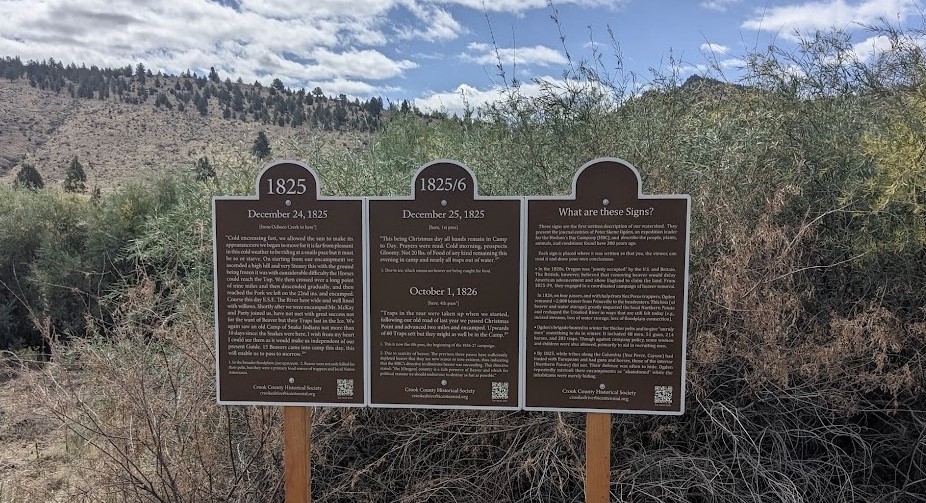
October 1, 1826
to Long Hollow
“Traps in the rear were taken up when we started, following our old road of last year we passed Christmas Point and advanced two miles and encamped. Upwards of 60 Traps sett but they might as well be in the Camp.1”
1. Due to scarcity of beaver. The previous three passes have sufficiently depleted beaver that they are now scarce or non-existent, thus indicating that the HBC’s directive to eliminate beaver was succeeding.
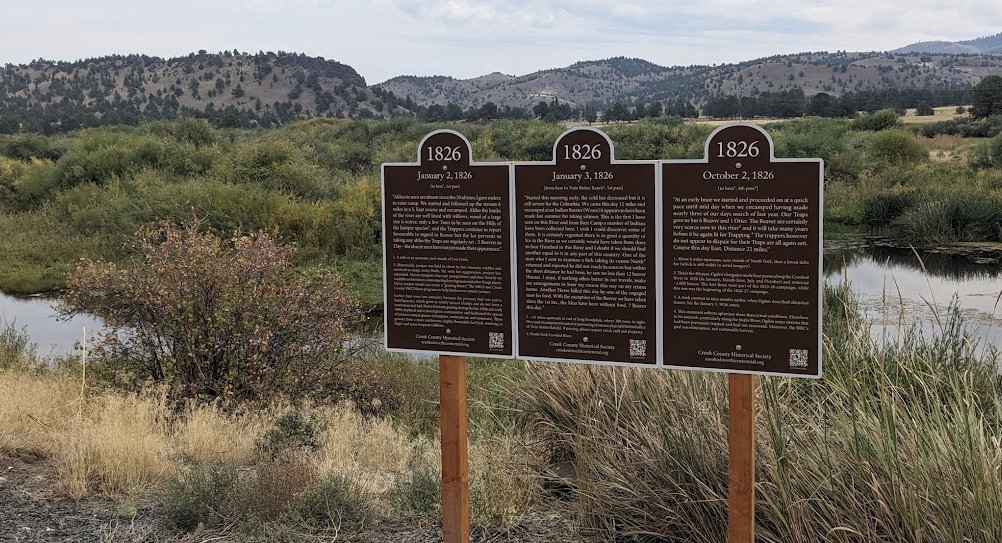
October 2, 1826
near NF Crooked River
“At an early hour we started and proceeded on at a quick pace until mid day when we encamped having made nearly three of our days march of last year. Our Traps gave us but 6 Beaver and 1 Otter. The Beaver are certainly very scarce now in this river1 and it will take many years before it be again fit for Trapping.2 The trappers however do not appear to dispair for their Traps are all again sett. Course this day East. Distance 22 miles.”
1. A stark contrast to nine months earlier, when Ogden described abundant beaver. See the January 3, 1826, entry.
2. This statement reflects optimism more than reality. Elsewhere in the journals, particularly along the Snake River, Ogden notes streams that had been previously trapped and had not recovered. Moreover, the HBC’s goal was elimination, not sustainable harvest.
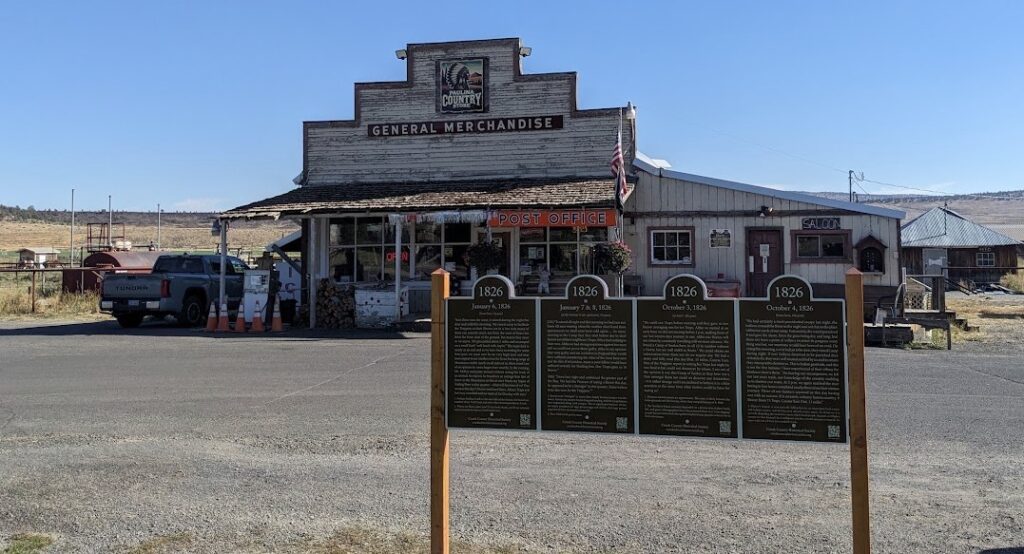
October 3, 1826
to the Sartain/Blue Mountain Ranch1
“We rais’d our Traps before starting and they gave us ten Beaver averaging one for ten Traps. Altho we started at an early hour we did not encamp before 2 p.m. making three of our last winters days journey in one. Altho our Horses will not fatten by constantly travelling still we must advance. We found a Camp of Snakes here, in all 12 in number without a Horse, but are well stok’d in Roots.2 We could obtain no information from them nor do we require any. We had a stony and hilly road this day Dist. 15 miles, Course East. One of the Trappers report in setting his Traps last night he was fired at but could not discouver by whom. I am not of the opinion it was this Camp of Snakes as they have not a Gun amongst them nor could we discover any Amunition – it is rather strange and I am inclined to believe it is a false assertion at the same time what motive could he have for saying so.”
1. Distance measurements are approximate. This entry is likely between the rodeo grounds and the Sartain, where they camped January 6-8, 1826.
2. The Northern Paiute economy depended on a diverse mix of plant foods, fish, and game. Ethnographers have characterized them as a “root-digging” people because roots and other gathered plant foods played a central role in their subsistence.
October 4, 1826
from the Sartain
“We had certainly a most providential escape last night, the Indians crossed the River in the night and sett fire to the plain within ten yards of our camp. Fortunately, the watch perceived it and gave the alarm, from the grass being dry and long, had there not been a point of willows to arrest its progress every thing was lost, our exertions would have been of no avail. On rising this morning, not at Indian to be seen, they raised Camp during night. If ever Indians deserved to be punished they certainly do, they were well treated and fed by us and in return they attempted to destroy us. This is Indian gratitude, and this is not the first instance I have experienced of their villany for kindness shown them.1 On leaving our encampment, we left our last years track, our knowledge of the country enabling us to shorten our route. At 2 p.m. we again reached the river having in four hours completed nearly three of our last winters journey. Three of our hunters rejoined us this day having met with no success. It is certainly a dreary barren country. 9 Beaver from 75 Traps. Course East Dist. 13 miles.”
1. Ogden’s brigade is systematically killing beaver, an important food source and habitat creator, and driving away already scarce game. In doing so, it is severely degrading the resources upon which local people depend, yet Ogden cannot see this. Instead, he is indignant that they would attempt to impede his quest with one of their few available tools.
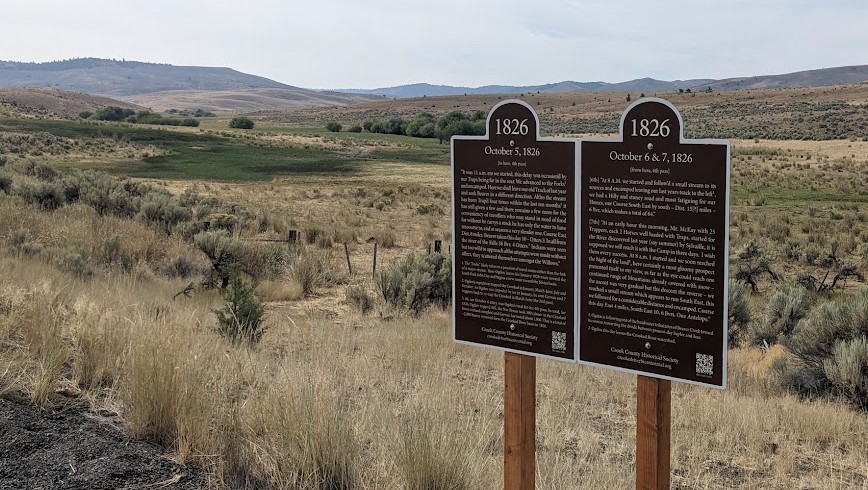
October 5, 1826
to present-day Suplee
“It was 11 a.m. ere we started, this delay was occasion’d by our Traps being far in the rear. We advanced to the Forks1 and encamped. Here we shall leave our old Track of last year and seek Beaver in a different direction. Altho the stream has been Trap’d four times within the last ten months2 it has still given a few and there remains a few more for the conveniency of travellers who may stand in need of food for without he carrys a stock he has only the water to have rescourse to, and at seasons a very slender one. Course East Dist. 8 miles. Beaver taken this day 10 – Otters 3. In all from the river of the Falls 58 Bvr. 4 Otters.3 Indians were seen but too wild to approach altho attempts were made without affect, they scattered themselves amongst the Willows.”
1. The “Forks” likely refers to a junction of travel routes rather than the fork of a major stream. Here Ogden leaves his January 1826 route toward the South Fork John Day and begins a new route toward the Silvies basin.
2. Ogden’s expedition trapped the Crooked in January, March-June (Gervais), July and October.
3. 64, see October 6 entry, was Ogden’s total for the 4th pass. In total, for 1826, Ogden trapped 465, the Nez Perces took 500 (closer to the Crooked River wetland complex) and Gervais harvested about 1,000. That is a total of ~2,000 beaver removed form the Crooked River basin in 1826.
October 6, 1826
from Suplee area
“At 8 A.M. we started and follow’d a small stream to its sources and encamped leaving our last years track to the left1, we had a Hilly and stoney road and most fatiguing for our Horses, our Course South East by south – Dist. 15[?] miles – 6 Bvr, which makes a total of 64.”
1. Ogden is following one of the headwater tributaries of Beaver Creek toward its source, traversing the divide between present-day Suplee and Izee.
October 7, 1826
leaving Crooked River watershed (toward Izee and the Silvies River)
“At an early hour this morning, Mr. McKay with 25 Trappers, each 2 Horses well loaded with Traps, started for the River discovered last year (say summer) by Sylvaille, it is supposed we will reach it with the Camp in three days. I wish them every success. At 8 a.m. I started and we soon reached the hight of the land1, here certainly a most gloomy prospect presented itself to my view, as far as the eye could reach one continued range of Mountains already covered with snow – the ascent was very gradual but the descent the reverse – we reached a small stream which appears to run South East, this we followed for a considerable distance and encamped. Course this day East 4 miles, South East 10. 6 Bvrs. One Antelope.”
1. Ogden this day leaves the Crooked River watershed.
December 17–31, 1825 | January 1-13, 1826 | July 3–6, 1826 | Sept 27-Oct 7, 1826